7 Steps to Trade Meme Coins Without Losing Your Whole Bankroll
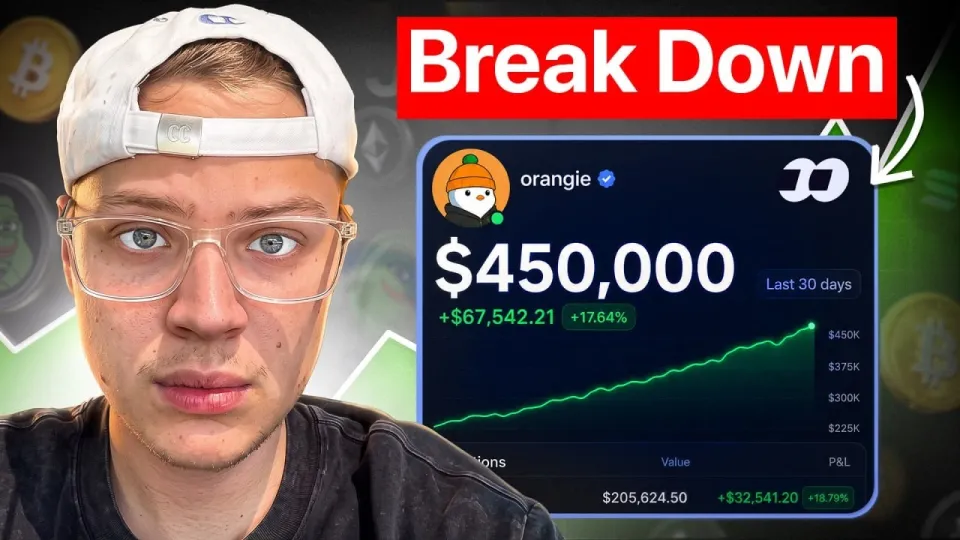
Video: How I Made $450,000 Trading Memecoins in 30 Days
Need articles like this for your video? They help promote it on YouTube and Google — order them in the Telegram bot @sat_sit_bot. Articles with your video embedded are written and posted by the bot itself — on popular topical sites (no ads). Try it free: 50 articles on us.
· based on the channel Orangie Web3
Key takeaways
- Meme coins are community-driven tokens on chains like Solana and Ethereum, priced almost entirely by attention and liquidity rather than cash flow.
- Creator Orangie Web3 reports turning roughly $450,000 in 30 days of meme coin trading, which makes the strategy worth studying but not blindly copying.
- Most retail losses come from buying illiquid launches at the top and sizing positions too large for the volatility.
- A single winner can offset several small losses, but only if each loss is capped deliberately in advance.
- Tools in the video's description include a paid community checkout on Whop and the FOMO trading platform referral link.
A meme coin is a cryptocurrency with no product, revenue or roadmap that matters — its price is set almost entirely by attention, community momentum and how much liquidity sits in the pool at any moment. Trading them profitably is less about predicting which joke goes viral and more about controlling position size, entry timing and exits. In his video “How I Made $450,000 Trading Memecoins in 30 Days,” creator Orangie Web3 walks through his own trades, and the paid community he points viewers to is available through the Kaizen Group checkout on Whop.
What actually separates a meme coin from a normal token
A meme coin has no fundamental valuation model, so every price you see is a liquidity event rather than an earnings multiple. That single fact changes everything about how you trade it. On Solana, a new token can launch, run to a multi-million-dollar market cap and collapse inside a few hours, and the same pattern repeats on Ethereum and Base with slightly slower clocks.
Because there is no cash flow to anchor a price, three variables do the work instead:
- Liquidity depth — how much capital sits in the pool; thin pools mean your own sell order moves the price against you.
- Holder distribution — how much supply a small number of wallets control; concentrated supply means one seller can end the move.
- Attention velocity — how fast mentions, wallets and volume are growing; a meme coin that stops being talked about usually stops going up.
The practical consequence is that a meme coin trade is a momentum trade with a hard time limit. You are not waiting for a company to execute; you are renting a narrative for hours or days.
Why the $450,000 result is a sample size of one
The headline number in the video is real for the person who made it, but it describes one path through a distribution of outcomes. Thirty days of trading can produce a six-figure result and still tell you almost nothing about the expected value of the next thirty days, because meme coin returns are dominated by a handful of outliers.
That skew is the core mechanic. A trader who takes twenty positions may lose small amounts on fifteen of them, break even on three, and make most of the profit on two. This is exactly the pattern one viewer described after losing roughly 90% of a $100 starting stake and then recovering with a single triple on a token. The lesson is not that losses are fine — it is that losses must be small enough that a winner still matters.
Watch the reported figure for what it is: a demonstration of a method under favorable conditions, not a forecast. Anyone selling certainty about meme coin returns is selling something other than trading.
7 steps to structure a meme coin trade
These steps are a repeatable process for approaching any meme coin, whether it launched ten minutes ago or has been trading for a week.
- Define the maximum you can lose before you look at a chart. Pick a number that does not change your financial life. New traders routinely start with $100 or less, and that is the correct scale while you are learning.
- Check liquidity before anything else. If the pool is small relative to your order, your exit is already compromised. A position you cannot sell at the quoted price is not a position.
- Inspect the holder list and contract. Look for a single wallet holding a large share of supply, for mint authority that has not been revoked, and for freeze functions that can trap your tokens.
- Size the position so a total loss is survivable. A common approach is to risk 1–5% of your trading capital per attempt, which keeps a losing streak from ending your participation.
- Write your exit before you enter. Decide the price or market cap at which you take profit and the level at which you cut. Meme coins do not give you time to think once the move starts.
- Scale out rather than all at once. Selling a portion into strength locks in gains while leaving exposure if the run continues — and removes the regret that pushes traders back in at the top.
- Log every trade with the reason you entered. Reviewing entries and exits is how you find out whether your edge is real or whether you simply caught one good week.
Reading the crowd instead of the chart
Meme coin charts are a lagging indicator of what a community is doing, so experienced traders watch behaviour around the token rather than moving averages. Volume that spikes without new holders is often exit liquidity; holder count that grows while price consolidates is often accumulation.
One recurring criticism in the comments under this video is worth taking seriously: successful traders often sit in private groups where calls are shared and positions are coordinated. If you are trading alone against people who see flow before you do, your information arrives late. That does not make groups magic — it means you should understand whose exit you might be providing. Treat any call, public or private, as a hypothesis to verify against liquidity and holder data, never as an instruction.
Common questions traders ask before their first buy
The doubts that come up most often are about speed, comprehension and losing money early — and each has a practical answer.
- “Am I going too fast?” Video formats compress a lot of process into minutes. Pause, replay, and rebuild each trade on your own screen before risking money.
- “I lost most of my first deposit, is this over for me?” A small early loss is tuition. Reduce size, keep a written log, and only scale up after a stretch of disciplined trades.
- “Do I need a paid community?” No. A group can shorten the learning curve and surface ideas faster, but it cannot replace your own risk rules, and paid access is not a performance guarantee.
- “How do I know a coin is not a scam?” You do not, fully. Revoked mint authority, distributed holders, locked or burned liquidity and a contract you can read reduce the risk; nothing eliminates it.
Tools and platforms mentioned in the video
The creator points viewers to a few resources alongside the walkthrough, and each serves a different purpose. The Kaizen Group checkout on Whop is the paid community tier; FOMO is the trading platform he demonstrates and refers viewers to; Discord and Instagram are where he posts updates and trade discussion.
Treat referral links as exactly that — links that may compensate the creator. They can be a convenient entry point, but they do not change the underlying risk of the asset you buy through them. Before depositing anything, confirm fees, withdrawal rules and whether the platform lets you sell as easily as it lets you buy.
Useful links
- Kaizen Group access: https://whop.com/checkout/plan_GTFkEFh0JFpU8?a=orangie
- FOMO trading platform: https://fomo.family/r/orangie
- Discord community: https://discord.gg/memecoins
- Instagram: https://www.instagram.com/orangieyt/
Final thoughts on trading meme coins responsibly
Meme coins reward speed, discipline and small losses, and punish conviction held too long. The $450,000 result shown in this breakdown is best read as a case study in position management under favorable conditions rather than a target to chase. Build the boring parts first — sizing rules, exit plans, a trade log — and the exciting parts become survivable. The analysis in this article follows the walkthrough published by Orangie Web3, whose channel covers Solana meme coin trading, entries and exits in detail. If you want the community side of that process, start with the Kaizen Group checkout on Whop and read the terms before you pay.
Questions & answers
How much money do I need to start trading meme coins?
You can start with very little — many beginners begin with around $100, which is enough to learn the mechanics without risking meaningful capital. What matters far more than the starting amount is that a total loss of that money would not affect your finances. Scale up only after you have a documented record of disciplined trades.
Is it realistic to turn a small account into six figures in a month?
It happens, but it is an outlier outcome rather than a plan. Meme coin returns are heavily skewed: most positions lose or break even, and a couple of winners produce nearly all the profit. Treat large reported gains as a demonstration of a method under favorable conditions, not as an expected return.
How do I avoid getting rug-pulled?
There is no complete protection, but you can reduce risk by checking that mint authority is revoked, that supply is not concentrated in a few wallets, and that liquidity is locked or burned. Avoid tokens where a single wallet can sell enough to collapse the price, and never size a position as if the downside were impossible.
Do I need to join a paid trading group to be profitable?
No. A group can speed up learning and surface ideas sooner, but it cannot substitute for your own risk rules, and private calls often mean you are later to the trade than the people sharing them. If you do join one, verify every idea against liquidity and holder data before buying.
Source: How I Made $450,000 Trading Memecoins in 30 Days · Markdown version